


As a seasoned supplier of Drywall Nylon Nails, I've encountered numerous queries from customers regarding the design of these nails, particularly whether they should have a pointed or flat tip. This seemingly simple question holds significant implications for the performance and application of drywall nylon nails. In this blog post, I'll delve into the characteristics, advantages, and suitable applications of both pointed and flat - tipped drywall nylon nails, aiming to provide you with a comprehensive understanding to make informed purchasing decisions.
Understanding the Basics of Drywall Nylon Nails
Drywall nylon nails are a specialized type of fastener used primarily in drywall installation and other light - to medium - duty construction projects. Nylon, as a material, offers several benefits such as corrosion resistance, lightweight, and quiet installation compared to traditional metal nails. The tip design of these nails plays a crucial role in how they interact with the materials they are driven into.
Pointed - Tipped Drywall Nylon Nails
Characteristics
Pointed - tipped drywall nylon nails have a sharp, tapered end. This design allows the nail to penetrate materials more easily. When driven into drywall or other soft materials, the pointed tip creates a small hole as it advances, reducing the amount of force required for insertion.
Advantages
- Easier Penetration: The sharp tip can effortlessly pierce through drywall, plywood, and other thin or soft materials. This is especially useful when working with delicate surfaces that could be damaged by excessive force. For example, when installing drywall on a wooden frame, a pointed - tipped nail can quickly and cleanly enter the wood without splintering it.
- Precision Placement: The pointed shape enables more accurate placement of the nail. It can be easily guided to the desired location, which is crucial in projects where precise alignment is necessary. This is beneficial in custom drywall installations or when attaching trim pieces.
- Less Surface Damage: Since the pointed tip creates a small entry point, there is less damage to the surface of the material being fastened. This is important for maintaining the aesthetic appearance of the finished project, especially when the drywall will be visible.
Suitable Applications
Pointed - tipped drywall nylon nails are ideal for applications where the nail needs to penetrate soft materials such as drywall, insulation boards, and thin plywood. They are commonly used in residential and commercial interior drywall installations, as well as in the assembly of lightweight furniture.
Flat - Tipped Drywall Nylon Nails
Characteristics
Flat - tipped drywall nylon nails have a blunt, flat end. This design distributes the force of the impact over a larger area when the nail is driven in.
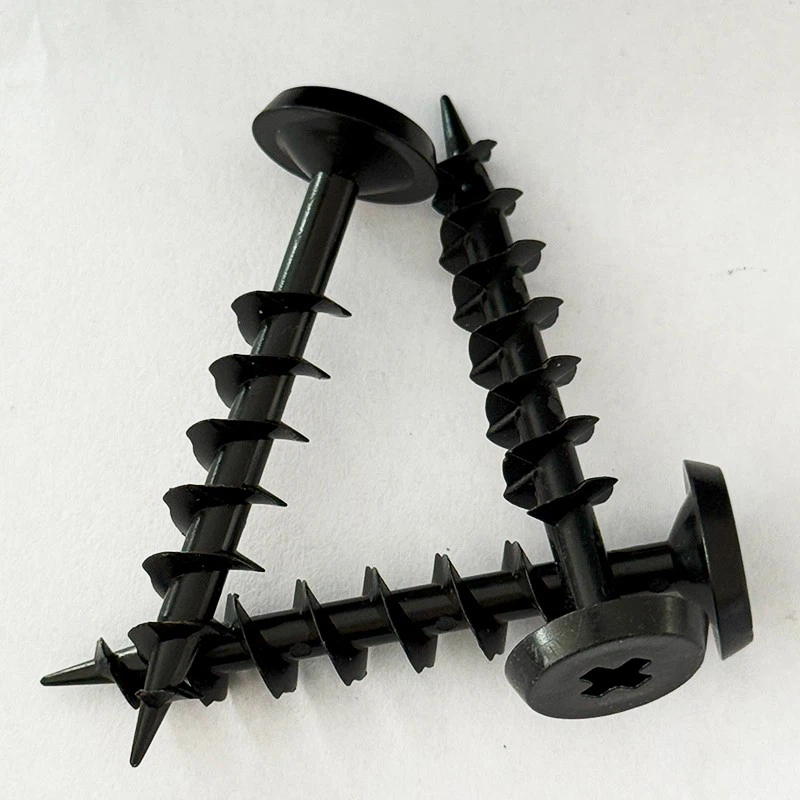

Advantages
- Greater Holding Power: The flat tip provides more surface area in contact with the material, resulting in better holding power. When used in applications where the fastener needs to withstand significant lateral or pulling forces, such as in areas with high wind loads or in structures that may experience vibration, flat - tipped nails are a better choice.
- Reduced Splitting: When driving nails into harder materials, such as dense wood or composite boards, the flat tip helps to prevent splitting. The distributed force reduces the likelihood of the material cracking along the grain.
- Surface Protection: The flat tip is less likely to damage the surface of the material being fastened, especially when used with thicker or more rigid materials. It can be used to attach materials without leaving deep indentations or marks.
Suitable Applications
Flat - tipped drywall nylon nails are well - suited for applications involving harder materials like thick plywood, OSB (oriented strand board), and some types of plastic panels. They are also commonly used in exterior drywall installations or in areas where the fastener needs to provide strong support.
Comparing Pointed and Flat - Tipped Nails in Different Scenarios
Drywall Installation
In most standard drywall installations, pointed - tipped nails are the preferred choice. Drywall is a relatively soft material, and the pointed tip allows for quick and easy installation. However, in areas where the drywall is subject to more stress, such as around doorways or corners, flat - tipped nails can be used to provide additional holding strength.
Furniture Assembly
For lightweight furniture made of thin plywood or particleboard, pointed - tipped nails are suitable for easy assembly. But for heavier furniture pieces or those that will be subject to more use, flat - tipped nails can ensure a more secure connection.
Outdoor Applications
When using drywall nylon nails in outdoor projects, flat - tipped nails are often a better option. They can better withstand the elements and provide more stability in the face of wind and other environmental factors.
Complementary Products
In addition to drywall nylon nails, there are other fasteners that can be used in conjunction with them or as alternatives depending on the project requirements. For example, Self Tapping Screws for 3/8 Steel are suitable for applications where a stronger and more permanent connection is needed. These screws can penetrate and thread into steel, providing excellent holding power. Tek Screw is another type of fastener that is commonly used in metal - to - metal or metal - to - wood connections. It has a unique design that allows it to drill its own hole and create a strong bond. Self Tapping Nylon Screws are similar to drywall nylon nails but offer the advantage of being able to create their own threads in the material, which can be useful in certain applications.
Conclusion
The choice between pointed and flat - tipped drywall nylon nails depends on several factors, including the type of material being fastened, the required holding strength, and the aesthetic requirements of the project. Pointed - tipped nails are great for easy penetration and precision in soft materials, while flat - tipped nails offer better holding power and are more suitable for harder materials and high - stress applications.
As a supplier of Drywall Nylon Nails, I'm committed to providing high - quality products that meet the diverse needs of our customers. Whether you're a professional contractor or a DIY enthusiast, we have the right drywall nylon nails for your project. If you have any questions about the tip design or need advice on which type of nail is best for your specific application, don't hesitate to contact us. We're here to assist you in making the right choice and ensuring the success of your project.
References
- Wood, John. "Fastening Techniques in Construction." Construction Magazine, 2020.
- Smith, Emily. "Choosing the Right Nails for Drywall Installation." Home Improvement Journal, 2019.
- Johnson, Mark. "The Science of Fasteners." Engineering Review, 2018.


