

Mainstream Material Types and Characteristics Comparison
12mm waterproof backing boards are mainly divided into two categories: cement-based and XPS foam composite, with significant performance differences:
Cement-based backing board (fiber cement board): Made of cement, quartz sand, and alkali-resistant glass fiber under high pressure and steam cured, with a density of approximately 1.25–1.35 g/cm³. It features A1-grade non-combustible properties, high impact resistance, and excellent load-bearing capacity (capable of withstanding over 100 kg/m²). While inherently water-resistant, it is slightly permeable and still requires a waterproof layer in high-humidity areas. The disadvantages are its relatively high weight (approximately 14 kg/m²), dusty cutting process, and the need for two people to work together during installation.
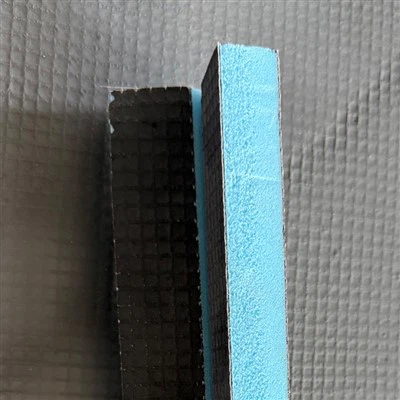
XPS foam composite backing board uses high-density extruded polystyrene as the closed-cell core material, with double-sided composite mortar and alkali-resistant mesh. The core is 100% waterproof and non-absorbent, with built-in thermal insulation (thermal conductivity 0.028–0.034 W/(m·K)). It weighs only 1/3 of cement board (approximately 4–6 kg/m²) and can be cut with a utility knife without dust. The disadvantages are slightly lower rigidity than cement board, a fire rating typically B1, and it should not be exposed to open flames.
This 12 mm standard version features a reinforced bending design with a double-layer fiberglass mesh surface reinforcement. Its impact and bending resistance far exceeds that of the 6 mm thin version, making it completely stable and reliable for laying regular ceramic tiles, medium and large slab ceramic tiles, and thin slab rock. The panels undergo high-precision grinding and leveling at the factory, resulting in minimal flatness error. After cleaning away surface dust, they can be directly applied using thin-lay tile adhesive, eliminating the need for multiple layers of cement mortar plastering and repeated curing and drying. This saves on costs for waterproof coatings, mortar, and other auxiliary materials, and significantly shortens the overall construction period. Panel cutting, grooving, and pipe drilling are simple operations; plumbing and electrical pre-installation and niche design can all be completed on-site, allowing ordinary construction workers to easily operate the work.
Core Application Scenarios
Due to its balanced strength and thickness, the 12mm thickness is commonly used in the following areas:
Wet Area Floors and Underfloor Heating Coverage: Lay on bathroom floors or above underfloor heating pipes. Cement-based models provide rigid support, while XPS models reduce downward heat loss and isolate moisture from the floor below.
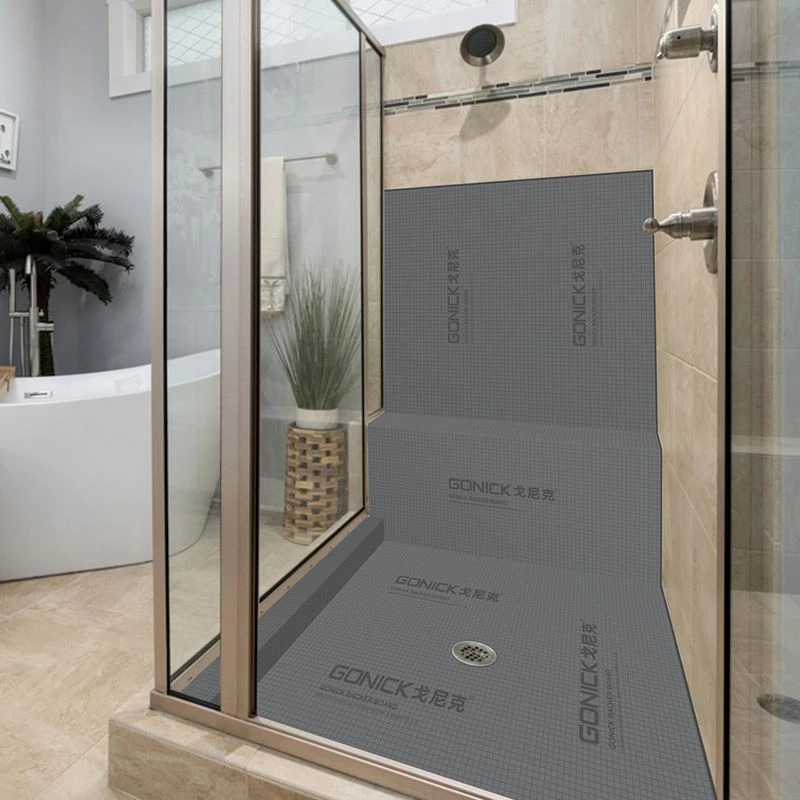
Shower Walls and Partition Systems: In lightweight steel frame partitions, 12mm provides sufficient screw holding power and impact resistance, suitable for direct adhesion of tiles or stone.
Overboarding: When the original wall surface is slightly uneven or needs to be renovated by covering old tiles, a 12mm thick XPS board can effectively level the surface and build a new waterproof base layer, avoiding the tedious process of removing the old base layer.
Pipe Covering and Niche Construction: 12mm XPS boards are easy to cut and drill holes, making them suitable for pipe covering and the construction of inner frames for niches.
Key Construction Control Points:
Fixing Spacing: For cement-based boards, the recommended screw spacing on the wall is ≤150mm around the perimeter and ≤300mm in the center. Due to the softer material of XPS boards, large-diameter plastic washer screws must be used to prevent them from sinking into the board and causing hollow spots when tightened.
Gap and Sealing: A 2-3mm expansion joint should be uniformly left between boards. Cement-based boards require alkali-resistant mesh tape and crack-resistant mortar. In wet areas, a flexible waterproof coating should be applied. XPS board joints must be sealed with special waterproof tape or sealant to ensure the core material is not exposed.
Load considerations: If suspending heavy bathroom fixtures (such as wall-hung toilets and large shower heads) on a 12mm cement substrate, it is recommended to fix them to the original wall or joists through the back panel; a 12mm XPS board alone cannot withstand heavy objects with high pull-out force.
Hot Tags: waterproof tile backer board 12mm, China waterproof tile backer board 12mm manufacturers, suppliers, factory, Waterproof Foam Backer Board, Kbrs Backer Board, cement water resistant backer board, waterproof backer board, Waterproof Cement Board for Shower, Shower Waterproof Backer Board