Three major trends affect procurement decisions for cement backer boards. Firstly, engineering tenders set higher requirements on long-term durability indicators such as freeze-thaw cycling, damp-heat aging and impact resistance. Low-grade cement boards with unstable formulas are gradually eliminated from public commercial projects. Secondly, environmental protection requirements are strengthened: many regions restrict raw materials containing harmful substances, pushing manufacturers to optimise cement formulations and adopt alkali-free reinforced fiberglass. Thirdly, one-stop supply becomes mainstream. Distributors hope manufacturers can supply matching joint tape, waterproof mortar and offer systematic technical training, instead of only supplying bare panels
Although cement-based backer boards have mature market recognition, quality gap between manufacturers is huge. Inferior products use insufficient cement content, recycled sand and sparse fiberglass mesh, leading to surface powdering, cracking and excessive water absorption after one or two years of service. Therefore, stable factory quality control becomes the core evaluation standard for long-term cooperation.
Our factory implements full-process quality control from raw material feeding, mixing, moulding, curing to finished product inspection. Each production batch undergoes sampling tests of water absorption, compressive strength, flexural strength and thermal cycling test. We can provide complete qualification documents including test reports and CE certification for overseas customs clearance and project acceptance. Real factory production lines, curing workshop and finished goods warehouse photos can be supplied to clients. We offer standard-size stock supply and customised sizes according to engineering drawings. We welcome global building material distributors, construction contractors and project developers to contact us for sample testing and bulk order negotiation, creating stable supply chains for high-durability wet-area tiling projects worldwide
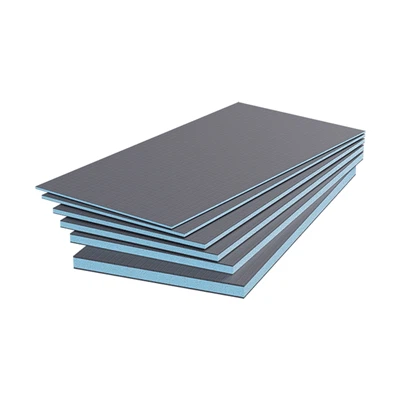
Nevertheless, contractors and specifiers should clarify application limits. The XPS composite tile backer board is not recommended for locations with continuous high temperature or open flame such as stove inner walls. For these extreme working conditions, cement-based backer boards remain a more appropriate option. All our XPS backer boards pass strict laboratory testing and hold CE and UKCA certification, fully complying with European and American building safety standards. We supply thickness ranging from 6 mm to 50 mm, standard sizes in stock and custom-cut dimensions available according to construction drawings. Complete factory records and workshop photos can be provided to global distributors and engineering contractors for project tender verification
Many buyers confuse cement backer boards with XPS composite boards. A clear selection rule: choose cement-based backer boards for heavy load, permanent immersion, exterior high-temperature alternation and projects requiring superior impact resistance. Select lightweight XPS backer boards for renovation, upper-floor projects, curved surface fabrication and projects pursuing fast installation and low labour cost. Our factory supports mixed container loading for two types of panels to satisfy distributors' diversified product portfolio demands. Standard specifications are kept in stock, and custom thickness and sizes can be arranged for large engineering orders. We provide complete installation manuals and technical support for all global partners.
Global buyers should also pay attention to supplier supporting capacity. Reliable manufacturers provide complete test reports, CE certification documents to support customs clearance and project acceptance. Our factory maintains standard-size inventory to support fast delivery for small sample orders and bulk orders of tens of thousands square meters. Custom thickness and special sizes are negotiable. We recommend buyers arrange material samples to carry out immersion and bonding tests before large-scale order placement, avoiding material mismatch after construction commencement.