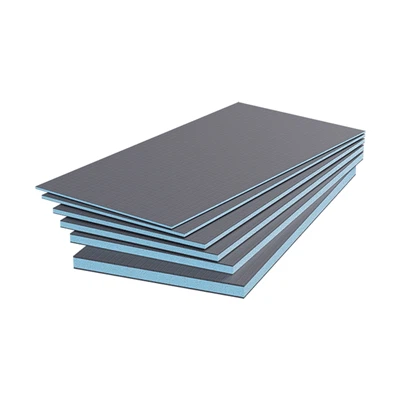
From an industry definition perspective, waterproof liners are flat protective plates installed in the interlayer, assembly base, and interior of equipment. They are also commonly referred to in the industry as seepage-proof liners, moisture-proof liners, or sealing isolation plates. Unlike exposed decorative panels, their core function is as a functional protective accessory, not for decoration. They primarily use their dense material structure to prevent moisture, condensation, dust, and corrosive media from penetrating the equipment's interior. They also serve to level the assembly, seal gaps, and buffer vibrations, making them widely adaptable to various industrial equipment sealing and protection scenarios.
Based on materials and operating conditions, mainstream waterproof linings in the industry can be divided into two main categories. The first category is ordinary economical linings, mostly made from recycled composite materials. While inexpensive, their basic waterproofing performance is limited. The material is porous, easily absorbs water, and is prone to powdering. They are only suitable for ordinary equipment with dry indoor environments and low protection requirements, and cannot be adapted to humid, outdoor, or high-frequency operating conditions. Furthermore, most lack environmental compliance certifications. The second category is industrial environmentally friendly waterproof linings, made from a new high-density composite substrate in a single molding process. Their dense, zero-porosity structure results in extremely low water absorption. They are also non-toxic, non-volatile, and recyclable, combining high-strength waterproofing and seepage prevention with green compliance characteristics. This is currently the mainstream choice for high-end equipment, export equipment, and cleanroom projects.
The core industrial functions of waterproof linings cover multiple protection needs and are indispensable key components for equipment. Firstly, they provide waterproofing and seepage prevention, effectively blocking the penetration of environmental moisture, rainwater, and equipment condensate, solving the problem of water accumulation and dampness inside the equipment at the source, and preventing malfunctions such as rust on metal parts and short circuits. Secondly, it provides dust and pollution protection, sealing assembly gaps and interlayer voids to prevent dust, mud, and impurities from entering the cavity, keeping the equipment clean and reducing component jamming and wear. It also functions as an assembly leveling and shock absorber, compensating for minor flatness errors in the mounting surface, evenly distributing vibrations and pressure during equipment operation, stabilizing the assembly structure, and preventing loosening and gap misalignment over long-term operation.
In practical industry applications, most equipment protection failures are closely related to improper selection and poor quality of the lining plates. Ordinary inferior lining plates, operating under conditions of high humidity, temperature fluctuations, and high-frequency vibration, are prone to water absorption and swelling, warping, powdering and flaking, cracking and leakage. This not only completely destroys their waterproof and protective capabilities, but the flaking debris also causes secondary pollution, affecting the normal operation of the equipment. More importantly, traditional lining plates often contain harmful additives that can easily release volatile harmful substances in a confined environment, failing to pass European and American environmental testing and becoming one of the main obstacles to equipment export.
High-quality waterproof linings, a mainstream material in the industry, generally employ a green, one-piece molding process. After precision grinding and purification, the lining surface is flat and uniform, with neat edges, free of burrs and warping defects. The material combines toughness and structural strength, resisting compression, aging, and corrosion, making it suitable for long-term use in harsh outdoor conditions such as exposure to water, humidity, dust, and high temperatures. It also meets international environmental standards, being non-toxic, harmless, zero-volatile, and recyclable, completely solving the industry pain points of traditional linings such as poor protection, environmental unfriendliness, and short lifespan. It is suitable for various fields including automated equipment, construction machinery, environmental water treatment, electrical cabinets, clean rooms, and medical equipment.
From an industry selection perspective, procurement and manufacturer selection should focus on three core indicators. First, density and waterproofing rate are paramount. Prioritizing high-density substrates with low water absorption and no pores ensures long-lasting waterproofing. Second, environmental compliance is crucial. Exported equipment must use non-toxic, non-volatile products that meet international environmental standards to mitigate customs clearance risks. Third, dimensional accuracy and stability are essential. Flat, precisely sized linings ensure better installation fit and sealing, effectively reducing subsequent maintenance costs.
Overall, waterproof linings are core components of industrial protection systems, representing a significant value despite their small size. As industrial equipment upgrades towards higher precision, greener standards, and internationalization, traditional ordinary linings can no longer meet the demands of high-end operating conditions and export needs. Environmentally friendly, high-density, and durable industrial-grade waterproof linings will become the mainstream trend in the industry, providing a solid guarantee for the stable operation and compliant export of various industrial equipment.