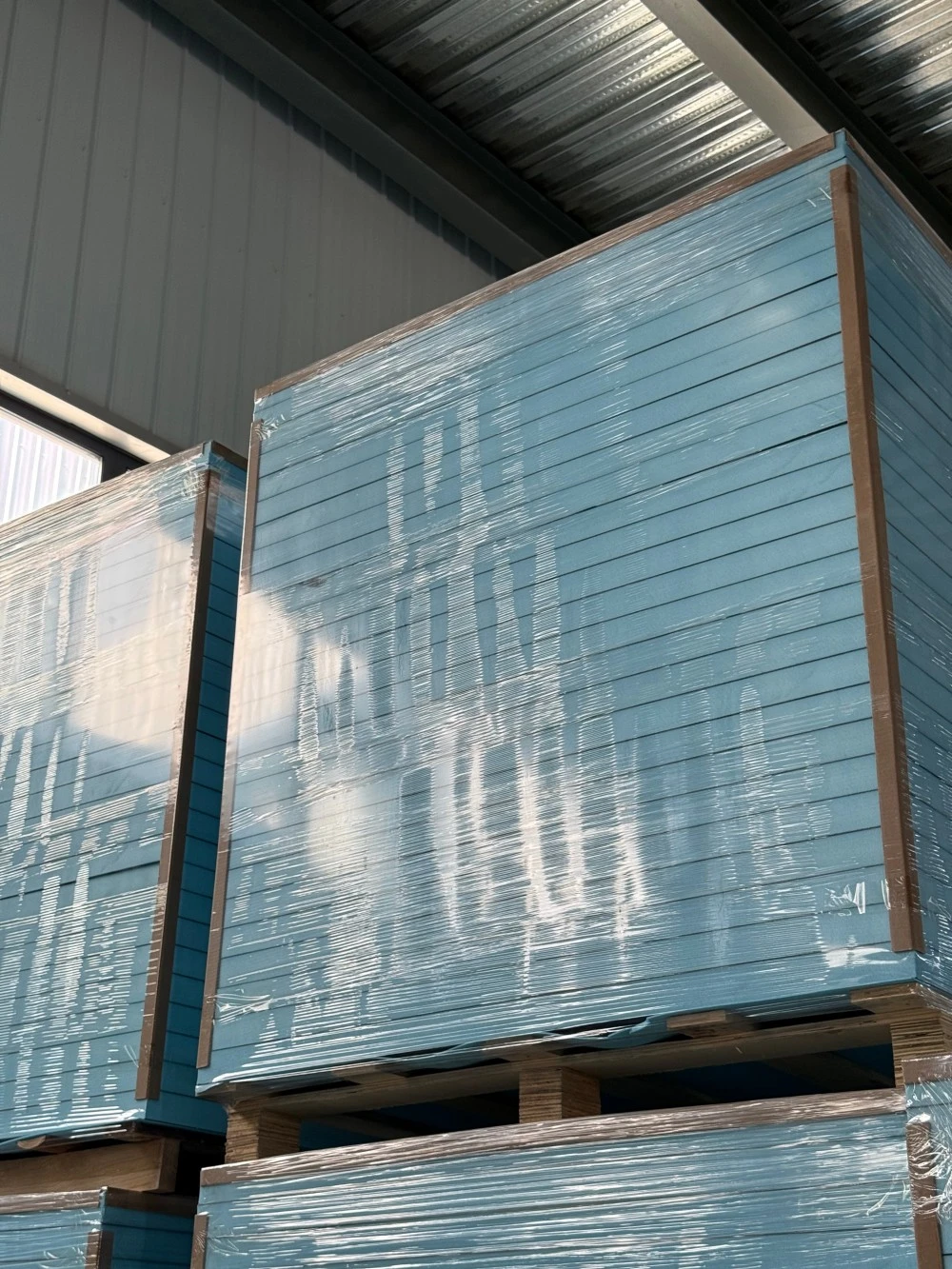

Also known in the industry as tile backer boards or tile installation substrates, these boards are designed specifically for thin-set tiling methods. Their primary function is to provide a flat, stable, and moisture-resistant bonding surface for tile adhesive; they block moisture from the wall and prevent substrate deformation from stressing the tile layer. In traditional construction, tiles are often applied directly to gypsum or wood substrates; prolonged exposure to moisture causes these substrates to mold and swell, leading to tile cracking and detachment. Switching to tile substrate boards eliminates this risk at the source, making them particularly suitable for wet areas subject to constant water exposure.
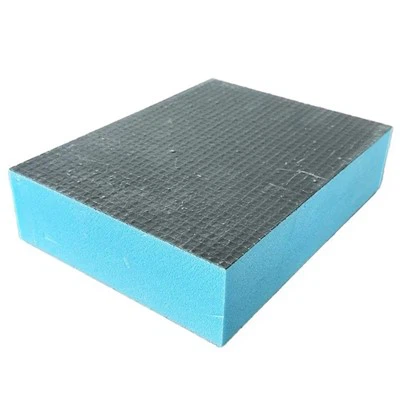
Our tile substrate boards come in two main series, allowing customers to choose the best option based on project environment and budget. The first type is a composite board with an extruded polystyrene (XPS) foam core-our highest-volume export product. It features a high-density, closed-cell XPS core sandwiched between layers of alkali-resistant fiberglass mesh and a polymer-modified cement coating, forming an integrated, multi-layer composite structure. The closed-cell foam core offers extremely low water absorption and inherent thermal insulation properties. Lightweight and easy to handle and cut, these boards avoid the bulkiness of traditional cement boards and generate less dust during cutting. They are suitable for use in shower enclosures, bathroom niches, and kitchen walls, and are compatible with underfloor heating systems, helping to minimize downward heat loss.
The second type is fiber-reinforced cement-based tile substrate board-essentially the traditional cement backer board. The substrate is manufactured by pressing together cement, aggregates, and a fiber mesh, resulting in high rigidity and impact resistance; it offers outstanding compressive strength, making it ideal for installing large-format tiles and heavy stone. While it lacks thermal insulation properties and is relatively heavy, its structural stability is market-proven, with extensive use in residential renovations and commercial lobby tiling projects across Europe and North America. Clients can choose between foam-core composite versions and cement-based versions based on project requirements; both types serve effectively as tile backer boards.
The board surface undergoes special treatment; the rough cement coating significantly enhances the bond strength of tile adhesives, preventing slippage during thin-set tile installation. Available in a wide range of sizes and customizable thicknesses-commonly 6mm, 10mm, 12mm, and 20mm-standard large panels are readily available in stock. They can also be cut to custom dimensions based on client drawings, allowing for the fabrication of irregular shapes such as shower niches and pipe enclosures. Cutting is simple-requiring only a standard utility knife or small saw-which significantly boosts on-site efficiency compared to traditional plaster leveling methods, thereby saving substantial labor time.
Applications span both residential renovations and commercial projects. Residential uses include bathrooms, shower enclosures, kitchens, balconies, and damp areas in basements. Commercial applications cover hotel bathrooms, public wet rooms, pool surrounds, and tiled walls in shopping centers, as well as partial exterior wall tiling. Beyond direct tiling, the boards can be used to box in vertical pipes to reduce drainage noise or to create integrated bathroom niches, eliminating the need for red-brick masonry and resulting in a cleaner, more streamlined appearance. Many overseas contractors report that using this backer board reduces the likelihood of future issues like hollow tiles or water seepage, significantly easing post-delivery maintenance burdens.
The boards have undergone rigorous physical and chemical testing; they are moisture- and mold-resistant, exhibiting minimal dimensional change in humid environments and resisting warping or deformation from expansion and contraction. The XPS composite version is virtually non-absorbent; when combined with proper joint sealing, it creates a comprehensive waterproofing system for wet areas. The cement-based version is water-resistant and rot-proof, making it suitable for supporting heavy tile finishes over the long term; Both types of boards support screw-based installation-mounting directly onto wall studs or solid wall surfaces-using a proven method that allows overseas installation teams to get up to speed quickly.
Regarding supply, standard specifications are kept in stock, lead times for bulk orders are reliable, and OEM services for custom cutting and surface finishing are available; Products can be supplied with relevant certifications, such as CE and UKCA, to meet market entry requirements in Europe and the UK. Batch inspections are conducted prior to shipment to monitor flatness and thickness tolerances, ensuring consistent performance across large-scale supplies and facilitating streamlined construction workflows.
Many designers and procurement professionals underestimate the importance of substrate boards, often assuming that basic wall leveling is sufficient for tiling. However, extensive project experience shows that the vast majority of tile failures stem from an unstable substrate; Using a standardized substrate backing board eliminates the need for complex plaster leveling processes and mitigates risks associated with moisture in wet areas. Whether for residential renovations or large-scale commercial fit-outs, these boards provide a reliable foundation for tiling systems. Please feel free to contact us for technical specifications, samples for testing, or quotes for large-scale projects.
Hot Tags: tile substrate backing board, China tile substrate backing board manufacturers, suppliers, factory, go board waterproof backer board, goboard backer board, hardiebacker board waterproof, kerdi backer, Tile Backer Boards, Water Proof Board for Shower