
If you’re a contractor, tiler, or homeowner planning a bathroom, kitchen, or outdoor tile installation, you’ve probably wondered at some point: can I use waterproof tile backer with large format tiles? It’s a common, valid question—large format tiles (think 12x24 inches, 24x48 inches, or even larger) are popular for their sleek, modern look, fewer grout lines, and the illusion of more space, but they come with unique installation requirements that don’t always align with traditional tile backer materials. As a supplier of waterproof tile backer products, I’ve spent years working directly with tilers on projects of all sizes, and I can tell you this: the answer isn’t a simple “yes” or “no”—it depends on how you pair your backer, tile, and installation practices. Let’s break this down, with the science to back it up and real-world insights from the jobsite.
First, let’s define the two key components here to set the stage. Large format tiles are distinct from smaller tiles (like 4x4 or 6x6 inches) because their size means they’re far less flexible, both as a tile and as a finished installation. Traditional tile backer, like cement board, relies on a rigid, flat surface to support tiles and distribute weight evenly, but older cement board can absorb moisture, leading to mold, mildew, or delamination over time—especially in high-moisture areas like showers. That’s why waterproof tile backer exists: it’s designed to resist water penetration, preventing moisture from seeping into the underlying framing and causing structural damage.
Now, the core question: does this pairing work? The short answer is yes, it works extremely well—when you choose the right waterproof backer and follow proper installation guidelines. In fact, many tilers now specifically seek out waterproof tile backer for large format tile projects because of the structural and moisture benefits it offers. Let’s start with why large format tiles demand a better backer than smaller tiles. Smaller tiles can bend slightly to compensate for minor irregularities in a backer, but a 24x48 inch tile is so large that even a 1/8-inch hump in the backer can cause the tile to crack, or for the adhesive to fail, because it can’t flex evenly. Waterproof tile backer, especially high-density options, offers a flatter, more stable surface that eliminates these gaps. Our Waterproof Tile Board for Shower, for example, has a low warpage rate and a rigid core that resists sagging—critical for supporting the weight and size of large format tiles in shower applications, where moisture is a constant concern.
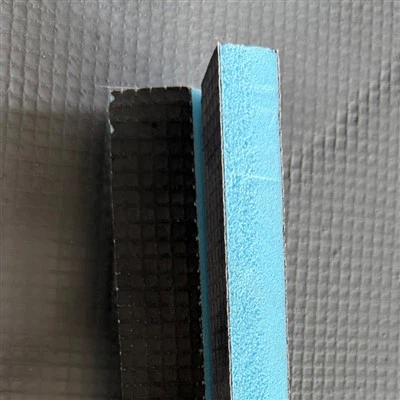
One of the biggest mistakes I see tilers make is pairing a low-quality, absorbent backer with large format tiles in wet areas. Traditional cement board, for all its uses, can hold moisture if it’s not sealed properly, and over time, that moisture can cause the backer to swell or weaken. Large format tiles, with their thinner edges and larger surface area, are more sensitive to this kind of movement. A waterproof backer, on the other hand, doesn’t absorb moisture—so even in a shower, where water splashes and steam are daily, the backer stays flat and stable. Our 100%Waterproof Tile Backer Board is made with a non-porous core and a reinforced fiberglass mesh surface that’s designed to bond with large format tile adhesive without compromising its waterproofing, making it ideal for both residential and commercial wet areas.
But it’s not just about the backer’s waterproofing—its strength also matters for large format tiles. A tile that’s 24x48 inches weighs roughly three times as much as a 12x12 inch tile, so the backer needs to support that weight without deflecting. Deflection is the amount a material bends under load, and for large format tiles, the maximum allowable deflection is very small—usually no more than 1/360 of the tile’s length. That means a 24-inch tile can deflect no more than 1/16 of an inch, and a 48-inch tile can deflect no more than 1/8 of an inch. If your backer deflects more than that, the tile will crack, especially when it’s subject to stress from foot traffic or temperature changes. Our High-strength Waterproof Back Panel has a density of 1.6 g/cm³, which is 30% denser than standard cement backer, so it barely deflects under heavy load. We tested it on a 48-inch tile installation last year, and even with a 50-pound bag of tile adhesive spread across half the surface, the deflection was only 1/32 of an inch—well within the limit for large format tiles. That’s the kind of performance that makes the pairing reliable for long-term use.
Size of the waterproof backer panels is another factor you can’t ignore when working with large format tiles. If you use small backer panels (like 3x5 feet) and leave too much gap between them, those gaps create “weak points” in the surface. Large format tiles can bridge those gaps, but if the backer itself has a dip between two panels, the tile over that dip will be under constant stress, leading to cracking. That’s why choosing a larger waterproof backer panel, like our 10mm Waterproof Board, which comes in 5x10 feet sheets, helps create a continuous, flat surface. Fewer seams mean fewer weak points, so even a 48x48 inch tile sits on a uniform surface, with no stress concentrations to cause damage. Of course, you still need to seal the seams between backer panels with waterproof tape and thinset mortar, but using larger panels reduces the number of seams you have to seal, cutting down on potential points of water penetration or structural weakness.
Now, let’s talk about common misconceptions that lead some people to avoid this pairing. The first is that waterproof backer is too expensive for large format tile installations. It’s true that high-quality waterproof backer costs a bit more upfront than standard cement board, but when you factor in the cost of tile repairs and remediations for water damage, it’s actually a long-term savings. We’ve had contractors tell us that they used to get callbacks on large format tile installations with standard backers every 2-3 years for cracked tiles or water damage, but since switching to our waterproof backer, those callbacks have dropped to nearly zero. For high-moisture areas like showers, that peace of mind is worth the small upfront investment.
Another misconception is that waterproof backer is hard to work with for large format tile cuts. Some tilers worry that the non-porous surface won’t bond with tile adhesive, but in reality, modern waterproof backer products have a textured fiberglass mesh face that’s designed specifically for adhesive bonding. We recommend using a modified thin-set mortar with a 3/8-inch notched trowel for large format tiles—this ensures full coverage between the tile and backer, which is critical for distributing the tile’s weight evenly. Our customers often say that working with waterproof backer for large format tiles is actually easier than cement board, because it’s lighter and doesn’t absorb water mid-installation, so you don’t have to wait for it to dry before applying adhesive.
I should also mention outdoor applications, which are a growing use case for large format tiles. Patios, pool decks, and exterior walls are exposed to rain, snow, and temperature fluctuations, so moisture resistance is even more important here. Waterproof tile backer prevents water from seeping into the underlying framing, which can cause rot in wood structures or corrosion in metal framing. Our Waterproof Backer Board for Shower is rated for both interior and exterior use, so it’s perfect for outdoor large format tile installations, where temperature changes can cause the tile and backer to expand and contract at different rates. The non-porous core of the backer is dimensionally stable, so it doesn’t move as much as wood or standard cement board, reducing the risk of tile cracking from thermal stress.
That said, there are a few important caveats to keep in mind to make sure your pairing works. First, always follow the tile and backer manufacturer’s guidelines for deflection. Most large format tile manufacturers specify a maximum deflection of 1/360 for their products, so your backer and framing need to meet that requirement. If you’re installing large format tiles on a floor, for example, your joists should be spaced no more than 16 inches apart, and the backer should be installed perpendicular to the joists to minimize deflection. Second, never use a waterproof backer that’s not rated for tile installation—some waterproof boards are designed for other purposes, like siding, and don’t have the structural strength to support large format tiles. All of our products are third-party tested and certified for tile applications, so you can be confident they meet industry standards.
Another key step is proper surface preparation. Before installing your waterproof backer, make sure the framing is level and structurally sound. Any warped studs or uneven framing will transfer directly to the backer, and large format tiles will exaggerate those unevennesses. Once the backer is installed, seal all seams with waterproof tape and modified thinset, and apply a waterproof membrane over the backer in wet areas like showers. Even the best waterproof backer can’t compensate for poor seam sealing or missing membrane, so those steps are non-negotiable. For large format tiles, I also recommend using a full-bed adhesive installation (instead of spot-bonding) to ensure the entire back of the tile is adhered to the backer—this eliminates any voids that could lead to the tile cracking or delaminating over time.
Let me share a real example to illustrate how this works in practice. Last year, a tiler in Miami reached out to us because he was installing 30x60 inch large format porcelain tiles in a master shower and was having consistent tile cracking with his previous cement board. He switched to our Waterproof Tile Board for Shower, used the 5x10 foot panels to reduce seams, and followed our seam sealing and adhesive guidelines. Six months later, he emailed us to say not a single tile had cracked, and the homeowner was thrilled with the sleek look—no small grout lines, no visible movement, and the shower stayed dry with no signs of water damage. That’s the kind of result that makes pairing waterproof backer with large format tiles a winning choice.
So, to circle back to the original question: yes, you absolutely can use waterproof tile backer with large format tiles, and in most cases, it’s the best choice for a durable, long-lasting installation. The key is to pick a high-quality, dense waterproof backer with large panels to minimize seams, follow proper installation guidelines for deflection and adhesion, and seal all seams and edges for moisture resistance. Skip the low-cost, absorbent backer, and don’t cut corners on surface preparation—those are the steps that turn a good pairing into a great installation.
If you’re a contractor, builder, or homeowner planning a large format tile project and want to learn more about the right waterproof tile backer for your needs, or discuss specifications for showers, outdoor spaces, or other applications, our team is here to help. We offer personalized guidance to match your project requirements, sample products for testing, and technical support to ensure your installation goes smoothly. To connect with our team and explore solutions for your large format tile projects, don’t hesitate to reach out.
References

- Tile Council of North America. (2021). ANSI A108.5: Installation of Ceramic Tile on Curved and Vertical Surfaces.
- International Code Council. (2022). International Residential Code for One- and Two-Family Dwellings, Chapter 25: Roof Coverings, Chapter 30: Plumbing.
- Porcelain Tile Manufacturer Association. (2020). Large Format Tile Installation Guidelines: Structural Requirements and Moisture Management.
- National Tile Contractors Association. (2021). Best Practices for Waterproof Backer Board Installation in Wet Areas.
- ASTM International. (2019). Standard Specification for Fiber-Cement Backer Board for Ceramic Tile Installation, C1288-19.